
HVAC Guide to Commercial Heat Pumps
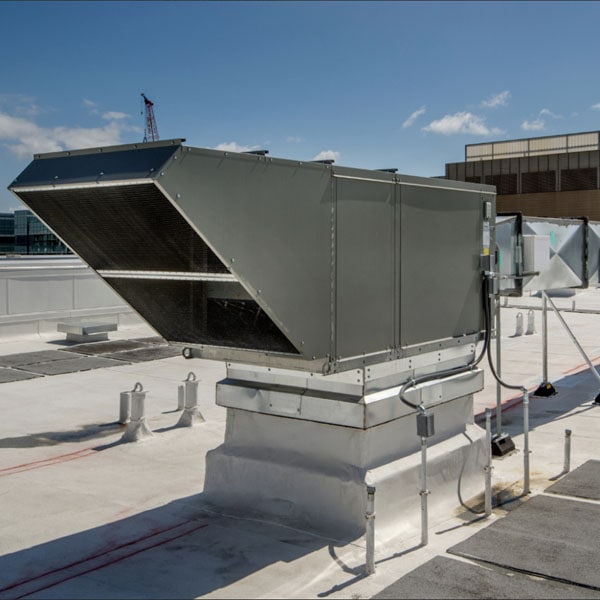
Heat pumps are not only for residential applications, as many may assume. They can be an energy-efficient and economical heating, ventilation, and air conditioning (HVAC) alternative here in Seattle to the traditional HVAC systems that the majority of commercial buildings use.
Many businesses trying to cut down on their energy costs and wanting to leave a smaller carbon footprint are looking at heat pumps to address this issue. Our knowledgeable Performance Mechanical Group professionals would happily discuss this option with you for your Washington business to see if it’s a viable alternative.
What Types of Commercial Heat Pumps Are There?
There are three main types of commercial heat pumps: air-source heat pumps, water-source heat pumps, and ground-source (or geothermal) heat pumps.
Air-Source Heat Pumps
Air-source heat pumps are the most commonly used type. They are popular because they are low-cost and easy to install, and they don’t require additional equipment or consistent water/ground temperatures to operate.
These systems acquire heat from the outside air and transfer it inside. However, air-source heat pumps can lose their efficiency in extreme cold temperatures, requiring a backup heat source for supplementation—unless a cold-climate heat pump is installed. These are designed to maintain efficiency and performance when outdoor temperatures are as low as -15°F.
Water-Source Heat Pumps
In contrast, water-source heat pumps rely on water to acquire or disperse their heat from the steady temperature of water. These systems sustain their temperatures, not requiring a backup heat source, no matter the temperatures outside in Seattle. They offer some of the highest efficiencies in the HVAC industry.
In a commercial water-source heat pump, consistent water temperature in the loop is most commonly achieved through mechanical means, such as a cooling tower, chiller, or boiler.
Ground-Source Heat Pumps
Ground-source heat pumps, sometimes called geothermal heat pumps, tap into the consistent temperatures found beneath the earth’s surface. By circulating fluid through underground loops, these systems transfer heat to or from the ground to regulate indoor temperatures. Because the ground maintains a relatively stable temperature year-round, geothermal systems provide exceptional efficiency and reliability in both heating and cooling modes without the need for supplemental heating sources.
While ground-source systems often require higher upfront installation costs due to excavation and loop installation, they typically deliver significant long-term savings through reduced energy use, lower operating costs, and minimal maintenance needs.
How Do Commercial Heat Pumps Work?
Essentially, heat pumps operate like refrigerators. They use a network of looping pipes extending from the hot side to the cold. The gas in the loops condenses to liquid and then expands again.
This moves the heat along where it’s needed––extracting it from where it’s not wanted and moving it to areas where it is, offering a cooling solution in the summer and heating in the winter. Just like a ceiling fan that reverses direction whether cooling or heating is necessary, the liquid in the loops reverses direction depending on what’s required.
What Are the Benefits of Commercial Heat Pumps?
Heat pumps are an effective part of efficient Washington HVAC systems. Simply moving heat from one area to another can use less energy than needing to generate heat.
According to the US Environmental Protection Agency (EPA), heat pumps are the most energy-efficient, environmentally clean, and cost-effective space conditioning systems available.
Here are just a few of the benefits of using a sustainable commercial heat pump instead of other heating and cooling means in Seattle :
• Significant savings on fuel bills as opposed to electric, oil, liquid gas, or solid fuel heating and cooling options. No energy is consumed here, just extracting heat from the air or water. This counters initial installation costs, meaning savings can be recognized in a relatively short time.
• Financial savings both on monthly operating costs and repair visits. Commercial water or ground-source heat pumps still need regular maintenance, but the closed-loop system of these products typically lasts up to 25 years, resulting in low repair costs and not needing to replace parts or the full system for decades.
• Happier employees and customers due to improved indoor air quality (IAQ) and low operating noise. Improved indoor air quality means healthier employees and customers. And a perceptibly lower operating noise won’t interfere with employee and customer focus and operations.
We Are Your Commercial Heat Pump Experts
Commercial heat pumps can serve both cooling and heating needs. With the benefits of energy efficiency, long-term cost savings, and happier employee options, a commercial heat pump is a win-win solution for most Seattle businesses.
Call Performance Mechanical Group at 425-251-0356 or request service online today to talk with one of our professionals to learn if a heat pump could be the right solution for you and your business.